
Didn’t Make the Team? A Houston Young Athlete’s 12-Month Comeback Plan
Tryout season just wrapped up across Houston-area schools and club programs. Some kids came home with a roster spot and a practice schedule. Some came home with a folded list, a quiet car ride, and a bedroom door that closed a little harder than usual.
If your young athlete got cut this month, here’s the honest truth from the coaching side: the next two weeks matter more than the tryout did. Getting cut is one of the most common experiences in youth sports, and it is also one of the most useful — if your athlete gets a plan instead of just getting over it. Here’s what that plan looks like.
First, Let It Hurt (For About 48 Hours)
Well-meaning adults love to say “shake it off.” It rarely works, and there’s a reason. Research on social rejection shows the brain processes being excluded from a group in many of the same regions it processes physical pain. Being cut genuinely hurts. Telling a 13-year-old it shouldn’t just teaches them to hide it.
So give it a window. Two days to be disappointed — no fixing, no silver linings. Parents, three things help enormously during that window:
- Don’t bash the coach in front of your kid. It feels loyal in the moment, but it hands your athlete a story where nothing is in their control.
- Don’t immediately solve it. Resist the urge to call three clubs before dinner. Sit in it with them first.
- Ask better questions. “What do you think went well out there?” opens more doors than “What did the coach say?”
Then, when the 48 hours are up, you go to work.
A Cut Is a Data Point, Not a Verdict
One coach. One day. One set of roster needs — and roster needs are a bigger factor than most families realize. A team carrying four returning point guards is not evaluating your daughter the same way a team that just graduated its whole backcourt is. The athletes who bounce back fastest are the ones who understand that a cut measures a moment, not a ceiling.
Which is why the single most valuable move in the whole process is also the one most families skip: ask the coach for specific feedback. Wait three or four days, send a short and respectful email, and ask one question — “What are the two or three things my athlete should work on to be a stronger candidate next year?”
Most coaches will answer that. And what comes back is no longer a rejection. It’s a training list.
The 12-Month Comeback Plan
A year sounds like forever to a middle schooler. Broken into phases, it’s very manageable:
- Weeks 1–2 — Regroup. Feel it, then get the coach’s feedback and write the two or three gaps on an index card. Put it somewhere visible.
- Months 1–3 — Keep playing. Rec league, a second sport, a developmental club team, pickup at the park. Reps beat rust every single time, and confidence gets rebuilt by playing, not by waiting.
- Months 3–9 — Attack the gaps. Two or three focused sessions a week on the specific items from that index card. Speed and agility, ball handling, arm care, conditioning — whatever the list says.
- Months 9–12 — Arrive known. Show up to open gyms, offseason workouts, and preseason conditioning. Coaches notice the kid who came back visibly better. That kid is memorable in a way a tryout number never is.
Or Try Something Completely New
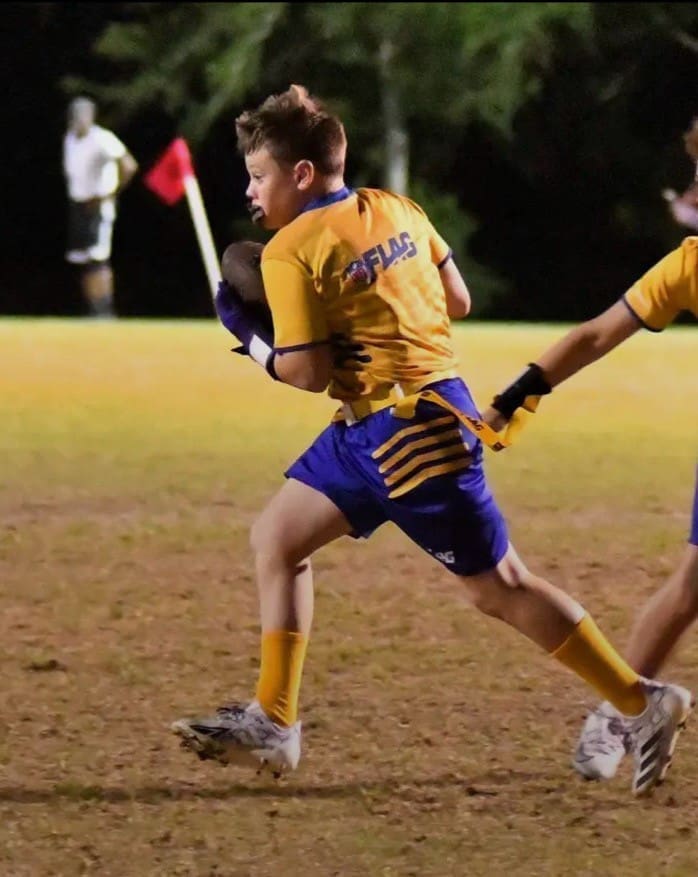
Some of the best outcomes after a cut aren’t comebacks at all — they’re pivots. Youth sports are shifting fast right now, and the doors that are opening are wide. Girls flag football has exploded, with high school participation jumping roughly 60% in a single year. Volleyball keeps climbing. And with the World Cup on U.S. soil this year, soccer fields around Houston have never been busier.
Kids also grow at wildly different rates. The athlete who’s a step behind at 13 is often a completely different competitor at 15. Multi-sport athletes tend to develop broader movement skills, get injured less often, and burn out less — so a season spent trying something new is rarely a season lost.
One Houston Note: Train Smart in August
If your athlete is training on their own this month, remember they don’t have a school athletic trainer watching conditions for them. Texas schools now measure wet bulb globe temperature before outdoor practices and shorten, delay, or move them indoors when readings climb — and Houston Augusts regularly land in the range that triggers those modifications.
Solo workouts deserve the same caution: early morning or evening sessions, shade or indoor space, water before they’re thirsty, and a hard stop at the first sign of dizziness, cramping, or nausea. A comeback plan doesn’t survive a heat illness in week one.
The Part Most People Miss
Ask any coach about the athletes they remember most, and the roster locks aren’t usually the answer. It’s the kids who got told no and came back anyway. That experience — deciding to keep working when nobody is requiring you to — builds something a starting spot never will.
Your athlete didn’t lose a year. They just got handed a list and twelve months to work through it.
At Be Someone Sports, we believe every kid deserves a place to keep playing — roster spot or not. Explore our Houston-area youth programs to find your athlete’s next opportunity, and if you know a family riding home quiet from tryouts this week, share this post with them. It might be exactly what they need to hear.


Share this post:
